
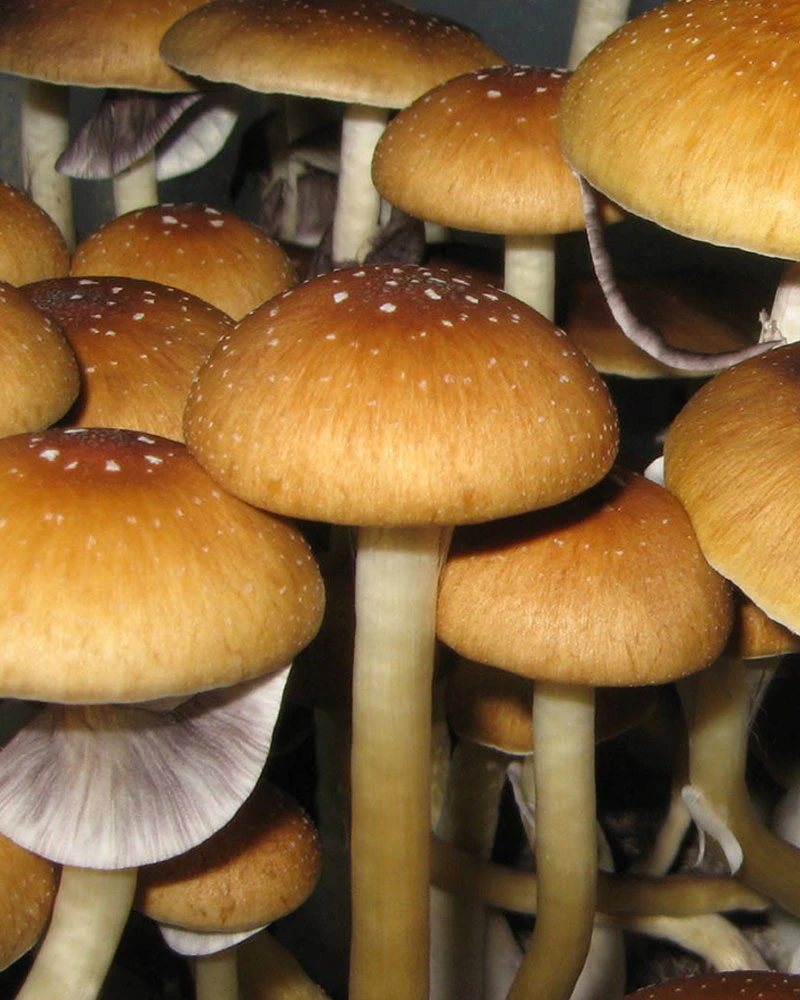
Magic Mushroom Spore Syringes
Price range: £5.00 through £30.00
- 0-1 working day dispatch when you order and pay before 1pm Monday to Thursday.
We can only sell these spores if you agree not to cultivate them as their cultivation is illegal in the UK under the Misuse of Drugs Act.
Some options are out of stock
Want to know the moment it returns?
We will email you a link to confirm first.
Prices
| Mushroom Species | Species Variant | Heavy | Strong | Medium | Stock |
|---|---|---|---|---|---|
| Psilocybe cubensis | Our Selection, A+ Albino, B+, Dominican, Golden Halo, Golden Teacher, Hawaiian, Jedi Mind Fuck, Koh Samui Super Strain, Leucistic Burma, Redboy, Rusty Whyte, TEX PE6 (Penis Envy), Tidal Wave, Treasure Coast | £15.00 | £10.00 | £5.00 | In stock |
| Panaeolus cyanescens | MIB, TTBVI | £30.00 | £20.00 | £10.00 | In stock |
| Psilocybe mexicana | Jalisco | £30.00 | £20.00 | £10.00 | In stock |
| Psilocybe tampanensis | Philosopher's Stone | £30.00 | £20.00 | £10.00 | In stock |
| Psilocybe cyanescens | Wavy Cap | £30.00 | £20.00 | £10.00 | In stock |
| Psilocybe semilanceata | Liberty Cap | £30.00 | £20.00 | £10.00 | Out of stock |
| Psilocybe azurescens | Flying Saucer | £30.00 | £20.00 | £10.00 | In stock |
| Psilocybe subaeruginosa | Subs | £30.00 | £20.00 | £10.00 | In stock |
| Gymnopilus luteofolius | Yellow Gilled | £30.00 | £20.00 | £10.00 | In stock |
Lab grade
Psilocybe cubensis, Panaeolus cyanescens, Psilocybe mexicana and Psilocybe tampanensis.
Outdoor grade
These species are wild printed, meaning: expect some hitchhikers (aka trichoderma and other microbes from outside which may have landed on the gills prior to printing them).
Psilocybe cyanescens, Psilocybe semilanceata, Psilocybe azurescens, Psilocybe subaeruginosa and Gymnopilus luteofolius (grass or trees along the bottom of their button).
Psilocybe cubensis
This is the species everyone talks about. And for beginner microscopists, this is the one you'll care about the most. Please note: we don't sell these to be cultivated as that would be illegal, we sell them for you to look at through the microscope.
Panaeolus cyanescens
Panaeolus cyanescens, or "Pan Cyans", is a dung-loving species from warm, tropical parts of the world. Ours isn't from the wild though. It's MIB, a cross of three lines (PHV, BVI and Nec'D) made by the Magic Myco Family.
It is very different from cubensis. The print is jet black, not purple-brown, and under the microscope the spores are lemon-shaped. If you've only ever looked at cubensis, put the two side by side and you'll see the difference straight away.
Psilocybe mexicana
This variety first came from Jalisco, Mexico. Psilocybe mexicana is a big name in the history of mushroom science. It made the headlines in 1957 when R. Gordon Wasson wrote about it in LIFE magazine, and a year later Albert Hofmann was studying this very species in his lab in Switzerland.
Psilocybe tampanensis
Found once, near Tampa, Florida, in 1977. One wild mushroom, and it has barely been seen in the wild since.
Every tampanensis around today comes from that single find, kept going by mycologists who passed it on.
Psilocybe cyanescens
The Wavy Cap, named for the wavy edge on its caramel-coloured cap. It loves wood, and these days it turns up on wood chip in parks and gardens across the UK, Europe and the Pacific Northwest.
It was first described in 1946 by Elsie Wakefield at Kew Gardens in London.
Psilocybe semilanceata
The Liberty Cap, probably the most famous mushroom in Britain. It grows in grass, in fields and pastures, never on wood, and you'll know it by its pointed, nipple-topped cap.
Elias Fries described it back in 1838, which makes it one of the first of its kind in Europe to be given a scientific name.
Psilocybe azurescens
The Flying Saucer. It comes from the Oregon coast in the Pacific Northwest, where it lives in dune grass and on woody debris. Paul Stamets named it in 1996 after finding it near Astoria, Oregon.
You'll know it by its caramel cap with a bump in the middle.
Psilocybe subaeruginosa
This species is native to Australia and New Zealand. It turns up in forests and gardens on wood chip and other woody debris, and it can look quite different from one patch to the next.
John Burton Cleland described it in 1927. For years people argued over whether it was really its own species or a cousin of the American and European ones. DNA testing has since confirmed it is a separate species.
Gymnopilus luteofolius
The Yellow-Gilled Gymnopilus, and the odd one out here: it isn't a Psilocybe at all. It grows in tight clusters on dead wood across North America from summer into autumn, and its cap changes colour as it ages, from purple-red through to yellow.
A good one to compare under the microscope. The print is rusty orange, and the spores are rough, not smooth like the Psilocybes. Charles Peck first described it in 1875.
Spore Syringe
- Spores suspended in sterile distilled water in a BD Luer-Lok syringe
- Choose how dense you want your spore syringes to be
- Sealed with a sterile, tamper-evident luer-locking cap
- One sterile wrapped 21G (0.9 mm) × 40 mm luer-locking needle
- One sterile 70% isopropyl alcohol / 2% chlorhexidine wipe, for cleaning your slides before dropping spores on to
- Sealed in a light-blocking mylar foil bag, labelled on the outside of the bag
Spore Density
If you want a seriously dense spore syringe that'll last you for years, we got 'em.
The denser you go, the less solution you need to use to inject on to your microscopy slides. Or blast it with lots and see the difference! You will be amazed.
Smaller syringe means higher spore ratio.
How Clean
Spore syringes at Cylocybe are inherently clean. Why? Because the full life cycle of the mushroom has been within a lab. The only exceptions to this are the species above which show grass / woodland - those were foraged and printed and so will never be as clean as all the other species and strains.
Useful
- Syringe is made of pp5 / polypropylene.
Delivery and paying
- Fast UK postage using Royal Mail Tracked 24 / 48.
- Fast International shipping options.
- Bank Transfer, Cash in Post, Bitcoin, Proton Wallet and Cash on Collection.
Legal Disclaimer
All spore products are sold strictly for microscopy, taxonomy, and identification purposes only. Do not attempt cultivation, as magic mushrooms containing psilocin or psilocybin are illegal Class A controlled substances in the UK under the Misuse of Drugs Act 1971. We do not provide cultivation advice and are legally compelled to cancel orders if we suspect misuse (as are all UK shops).
801 reviews for Magic Mushroom Spore Syringes
Only logged in customers who have purchased this product may leave a review.
james c. (verified owner) –
Always good! Super clean spores.
Andy S. (verified owner) –
Steve (verified owner) –
Good healthy spores
Tom (verified owner) –
James (verified owner) –
Quality prints.
Andrew (verified owner) –
Great stuff
James (verified owner) –
Mark (verified owner) –
Delivered very quickly and well packed. Haven't got round to working with the spores yet, but I'm expecting great things 🙂
Joe C. (verified owner) –
Ciaran (verified owner) –
Good quality spores 👍